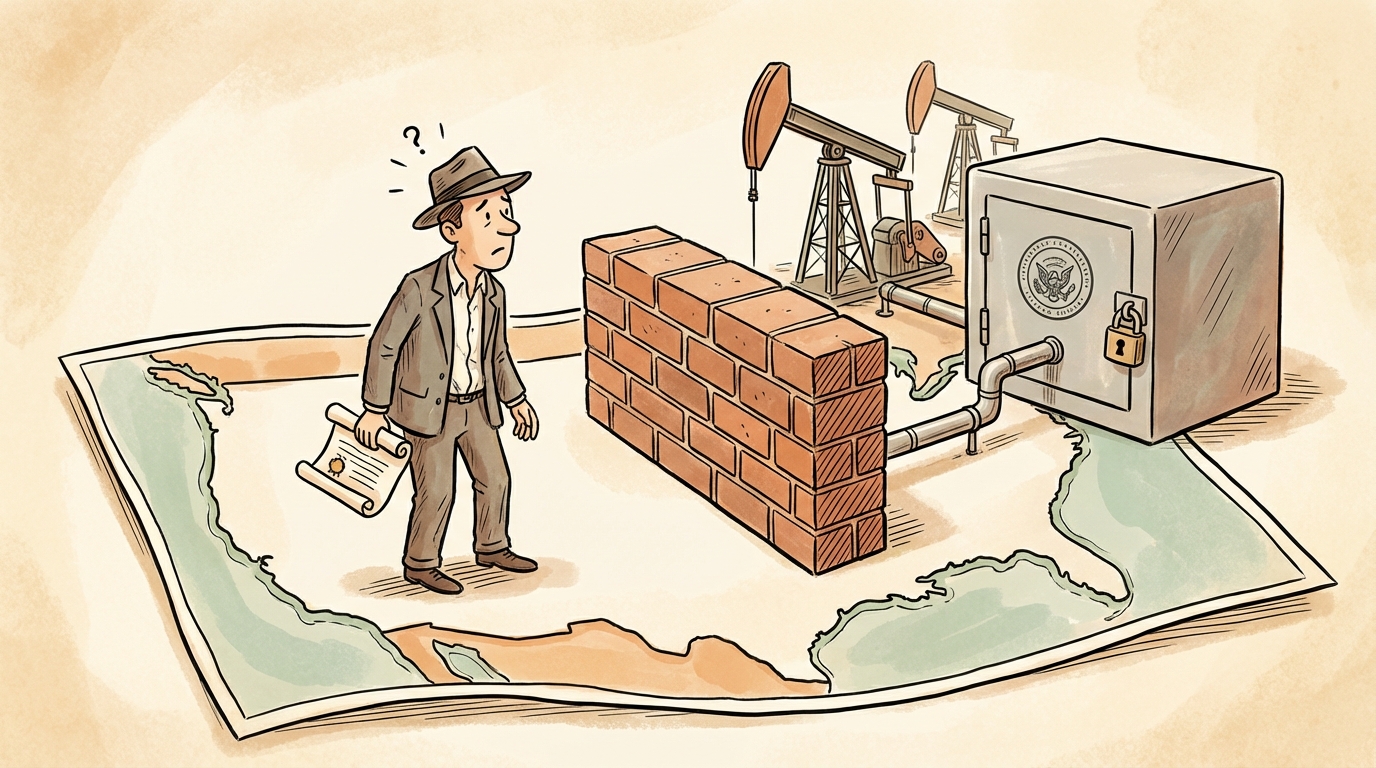
I tried to buy some minerals in Osage County, Oklahoma a few years ago. The seller was a nice guy who inherited the asset from his grandfather. He had paperwork. He had quarterly check stubs. We agreed on a price based on the cash flow.
Then we pulled the title and hit a brick wall. The seller finally told me the truth he had just learned from his attorney. “You can’t buy the minerals here.”
He was absolutely right.
In almost every other county in Texas, Oklahoma, or North Dakota, mineral ownership is relatively straightforward. You own a severed real estate interest. You sign a lease with an oil and gas operator. You get a royalty check in the mail based on the terms of that specific lease.
Osage County breaks all of those rules. If your family holds an interest here, you are participating in one of the most unique, highly regulated, and deeply misunderstood property structures in the United States. You do not own the dirt. You do not own the oil. You own something entirely different.
Let us break down exactly what you have, why the paperwork is so frustrating, and what it actually means for your family’s future.
Normal Minerals vs. The Osage Mineral Estate
To understand your situation, we have to look at the map. The Osage Nation Reservation covers approximately 1.47 million acres. That exact footprint is also known as Osage County, Oklahoma.
If you own standard minerals in a neighboring county, you hold a fee simple title. You can lease it to Exxon or Continental. You negotiate your royalty percentage.
Inside Osage County, no individual or group of individuals owns the minerals. The United States government holds title to the :Osage Mineral Estate in trust for the Osage Nation. The Tribe itself is the beneficial owner of all the oil, gas, and other sub-surface minerals across that entire 1.47 million acre expanse.
This traces back to the Act of June 28, 1906. That federal law effectively severed the mineral estate from the surface rights across the entire reservation and reserved the wealth of the underground for the Tribe as a whole.
Because the Tribe owns the minerals, you cannot sign an oil and gas lease. You have no right to negotiate a bonus payment. You have no say in the royalty rate. The Osage Minerals Council, an elected governing body, administers and develops the estate. The Bureau of Indian Affairs (BIA) Osage Agency manages the estate on a day-to-day basis.
So if you are getting a check, what exactly do you own?
What a Headright Actually Is
You own a :headright.
A headright is simply the right to receive a quarterly distribution of funds derived from the Osage Mineral Estate. It is a federally protected property right. It behaves a lot like a regulated annuity.
When oil and gas companies want to drill in Osage County, they do not mail you an offer. They deal directly with the Osage Minerals Council and the federal government under specific federal regulations. The U.S. Department of the Interior collects the money from those leases. The government then distributes those funds to headright owners four times a year.
A common myth is that only Osage Nation members own these. That is false. The Osage Nation Minerals Council FAQ points out that Indians of other tribes, non-Indians, corporations, and churches own headrights today. In fact, the BIA estimates that roughly 25% of all headrights are owned by non-Osages.
Many of the people we speak with are non-Osage families who inherited a fraction of a headright from a distant relative. They look at their paperwork and think they hold a standard mineral deed. They usually find out the hard way that they are holding something far more complicated.
The Owner’s Nightmare Scenarios
Holding a headright can be a wonderful source of passive income. But for many families, especially those who inherit fractional pieces and live out of state, the administrative burden quickly outweighs the financial benefit. We have seen this happen over and over again.
Probate and Inheritance Friction Inheriting a headright is not like inheriting a farm. If a family member passes away with standard Oklahoma minerals, you file probate in the county courthouse. The judge issues an order. You record it. You send it to the oil company.
With a headright, you are dealing with a property right wrapped heavily in federal trust law. The Department of the Interior and the BIA are deeply involved in the administration of these assets. The process requires specific federal documentation. There are historic rules around “certificates of competency” and restrictions on how these interests can be alienated or passed down. If you do not know the federal process, your legal bills can quickly consume the value of the asset. We wrote a survival guide for inherited minerals that touches on the shock families feel when they realize probate is rarely simple. In Osage County, that shock is magnified.
Address Drift and Bureaucracy If you own standard minerals and you move to a new house, you mail a change of address form to the operator. If you forget, the operator puts your funds in suspense. Eventually, it goes to the state unclaimed property fund.
With a headright, your funds are managed through an :Individual Indian Money (IIM) account or direct disbursements from the trust. The U.S. Department of the Interior acts through the BIA Osage Agency to collect the funds. No tribal entity has the authority to collect this money. You have to communicate directly with federal agencies like the Bureau of Trust Funds Administration (BTFA) to update your account.
Missing a piece of mail here does not just mean calling a Houston oil company. It means navigating federal phone trees. Recently, the Osage Minerals Council noted they are actively monitoring the planned closure of the BIA Osage Agency office. When the physical office managing your estate faces reorganization or closure, the risk of your paperwork getting lost in the shuffle skyrockets.
Buyer Confusion The third nightmare scenario happens when an owner decides to sell. They list their “minerals” for sale. A standard buyer makes an offer. The buyer spends weeks trying to run title in the county clerk’s office. They find nothing. The deal falls apart because the buyer does not understand that they are actually trying to purchase a right to quarterly distributions, governed by federal approval processes, rather than a dirt-level asset.
A Due Diligence Checklist for Owners
If you think you own an interest in Osage County, you need to figure out exactly what is sitting in your filing cabinet. The rules of standard mineral management simply do not apply here.
First, confirm the nature of your asset. Look at your check stubs. Are they coming from a private oil company or from the federal government via the BTFA? If it is the government, you hold a headright interest.
Second, understand your account status. Many headright owners have their disbursements placed on voluntary hold. You need to know if you are an IIM account holder. Osage tribal members with headright interests do not automatically have IIM accounts. It depends on how your specific competency status and trust assets were historically classified.
Third, investigate transfer restrictions. A headright is protected property. You cannot just sign a quitclaim deed on your kitchen table and hand it to a buyer. Transferring a headright requires navigating BIA approvals and meeting specific federal criteria. You must ask the agency exactly what paperwork they require for a legal transfer or inheritance step.
Fourth, request your payment history directly from the Osage Agency or BTFA. The Osage Minerals Council tracks the highest posted price of oil daily. But your actual distribution depends on the total pool of lease revenue collected by the government divided by the shares. You need the historical data to know what your fractional share actually yields in a normal year.
Holding Process Risk
We talk to a lot of families who feel overwhelmed by this. They inherited a piece of paper that generates a few checks a year but requires constant monitoring of federal regulations. They worry about what will happen when they pass it on to their own children. They wonder why sentiment can freeze your royalty check when the reality is just a mountain of federal red tape.
Here is the honest truth about owning an Osage County headright. If your asset depends entirely on a federal trust distribution and a specialized legal regime, you are not just holding an energy asset. You are holding process risk.
You are betting that the federal government will process your address changes efficiently. You are betting that your heirs will have the time and the legal budget to navigate the BIA when you are gone. You are betting that the tribal leasing structure will continue to attract private capital despite the heavy federal oversight.
For some families, that is a perfectly fine arrangement. The checks come in March, June, September, and December. The income is passive. They are happy to let the government handle the details.
For other families, the administrative burden is simply intolerable. They want out. They want to convert a confusing quarterly distribution into a clear lump sum that they can actually control. They do not want to leave a federal paperwork puzzle for their kids to solve.
There is no right or wrong answer. But it is incredibly important to know what you actually own. In Osage County, the mineral estate is absolutely not for sale. The dirt belongs to the Tribe.
What you hold is a specific, regulated financial right. Knowing exactly what that right is worth and understanding the hoops required to transfer it gives you leverage. It gives you options. And in our experience, having options is the only way a family ever finds true peace of mind.
If you are holding an interest in Osage County and the paperwork is starting to feel heavier than the checks, it might be worth a conversation to see what your options actually look like. At the very least, you deserve to know the real math behind your asset.
:osage-mineral-estate
The Osage Mineral Estate refers to all the oil, natural gas, and other subsurface minerals located under the 1.47 million acres of Osage County, Oklahoma. Unlike most places in America where individuals can own the minerals under their land, this entire estate is owned beneficially by the Osage Nation. The United States government holds the actual legal title in trust for the Tribe, meaning private individuals cannot buy, sell, or lease the raw minerals here.
:headright
A headright is a specific property right that entitles the owner to receive a quarterly share of the income generated by the Osage Mineral Estate. When oil companies pay to drill in Osage County, the money goes to the federal government, which then divides it among the headright owners. You do not own the oil itself, you just own the right to a percentage of the cash it produces.
:individual-indian-money-account
An Individual Indian Money (IIM) account is an interest-bearing account managed by the Department of the Interior for individuals who have a stake in trust assets. If you hold a headright, your quarterly distributions are often routed through one of these accounts by the federal government before they reach your personal bank. Managing this account means dealing directly with federal agencies rather than private oil companies.